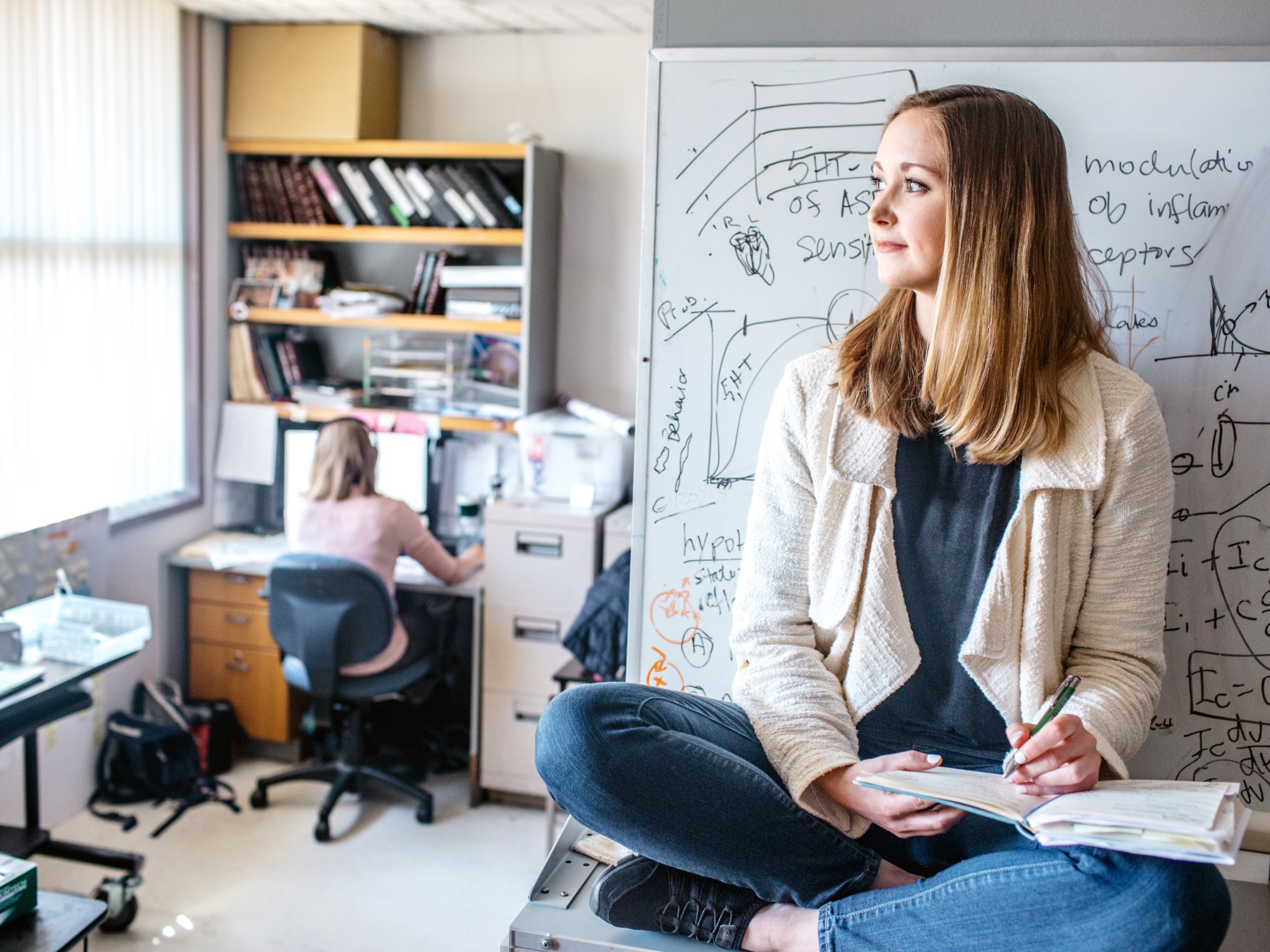
If you’ve read my About Me page, you know that I’ve loved science for awhile. I continue to be fascinated by the Space Race and the resulting technology we developed through that challenge. Truthfully. I wonder where we could be now if we never stopped manned space exploration (hopefully I’ll find out soon).
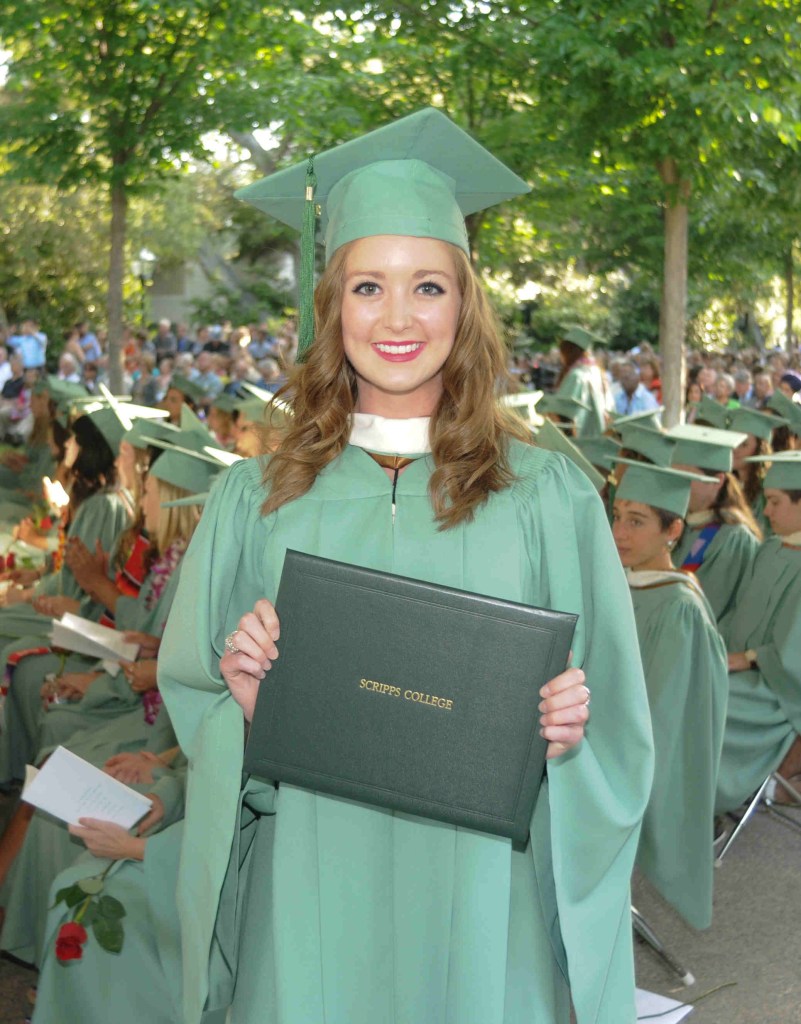
I found that science peaked my academic interests in high school, but I had no idea what I would do with a degree in science. I entered college at Scripps College, the Women’s College of the Claremont Colleges, and was accepted into a competitive first-year program called AISS (Accelerated Integrated Science Sequence). In this class, twenty-seven of us were team-taught by a physicist, chemist, and biologist in each of their respective disciplines. It was a fantastic, collaborative, fun, and extremely challenging way to begin college. But it was pivotal for my path. Through this class, I learned about the intersections between these disciplines and became interested in biophysics. That is–looking at biological quandaries through a physical lens. Eventually I ended up tailoring a self-designed major in biophysics and worked closely with my physics professor to make the Biophysics major an official major offered by the college. Now, there have been many biophysics majors conferred. I was thrilled that my persistence and unique interest led to a program that supports other intelligent and courageous women in science. And considering the increasingly interdisciplinary leanings of science, I hoped this major will aid Scripps graduates in setting them apart.
I spent my summers in college conducting original research. Still having a fascination with the cosmos, my first research opportunity was geared at studying a binary star system: Epsilon Aurigae. I had no idea what to expect in participating in real research. And this was an excellent introduction. We traveled to a remote observatory in the Los Padres National Forest to collect our data (emissions spectra of the stars that would tell us what elements the stars were made of). We became nocturnal, waking up at 6PM to begin the 2-hour start-up procedure for the telescope, and collecting data into the morning. Aside from the total abrupt circadian adjustment, it was a fantastic experience looking up at the brightest night sky I’ve seen in my life and knowing I was gaining new knowledge about a (teeny tiny) piece of it.
This first experience propelled me forward to find my niche in research. The next summer, as an AMGEN scholar, I spent my time at Columbia University in New York City studying bacterial biofilms in Lars Dietrich’s lab. At this point, an idea was forming: maybe I would be a professor someday. If that was to be, I knew I had to get my PhD. That’s a big deal and at least 5 years of your precious life. I knew if that was my path, I’d have to be sure. This program helped me determine that indeed this was something I wanted and had the capability to do. Plus, I met a lot of great aspiring scientists and had a pretty awesome summer living the big city life.
I returned to Scripps campus and dove deep into biophysics with the new Assistant Professor, Paul Nerenberg. In his lab, I used molecular dynamics to optimize a new Amber force field and eventually understand how cholesterol content plays a role in drug diffusion through the lipid membrane.
As I entered my PhD program at the University of California Irvine, I knew my interests (after a whirlwind of exploring many different fields). I joined Steven Gross’ lab and studied the biophysics of molecular motors. These are proteins within your cells that move cargo from one part of your cell to another. (Click here to watch the quintessential video that largely initiated my interest in these little guys.) They are biophysically intriguing, and very important (as many diseases result from molecular motor deficiencies) especially in elongated cells like neurons.

During my postdoctoral training in Dr. Miriam Goodman’s lab, I have applied these skills to study neurons in an animal model, C. elegans. Because of their extremely elongated shape, neurons especially rely on the cytoskeleton: active transport, compartmentalization, and structural support, in order to function. Not only are neurons, therefore, an incredible model to study the cytoskeleton, but these studies are also very clinically relevant since many human neurodegenerative diseases result from defects in neuronal structure. My research in C. elegans will inform future clinical research and lead to the development of successful therapies for neurodegenerative diseases. During this training period, I planned to gain the skills necessary to study the neuronal cytoskeleton in C. elegans . My postdoc has focused on understanding neuronal mechanoprotection in the context of C. elegans touch receptor neurons through genetic, molecular, cellular, and biophysical approaches.
My research interests have been centered around movement on multiple scales, unsurprising due to my background as a dancer. In my undergraduate years, I studied the movement of individual atoms in molecular dynamics experiments; in graduate school, I studied molecular motor complexes responsible for moving cargo in the cell. As a postdoc, I studied the cellular structures that allow neurons to move without sacrificing their idyllic shape for their function. At each step along my path in research, I’ve not only learned new techniques and ways of thinking, but I’ve met incredible people, traveled the world, and contributed to human knowledge. For this, I am ever thankful for my time spent in research. And although I no longer work in the lab, I am a proud female scientist who made several contributions to the world of discovery.

Feel free to read a few select papers of mine! Or contact me! Always a pleasure to talk science!
Regulation of in vivo dynein force production by CDK5 and 14-3-3ε and KIAA0528
Heterogeneity in kinesin function
Load-induced enhancement of Dynein force production by LIS1-NudE in vivo and in vitro
Optimizing Protein-Protein van der Waals Interactions for the AMBER ff9x/ff12 Force Field
“Science and everyday life cannot and should not be separated”
-Rosalind Franklin
 Dail Chapman